Mesh wireless Ad hoc network system: a decentralized highly mobile and rapidly deployable broadband multimedia communication solution
Mesh Wireless Ad-hoc Network System: Centerless, High Mobility, Rapidly Deployable Broadband Multimedia Communication Solution
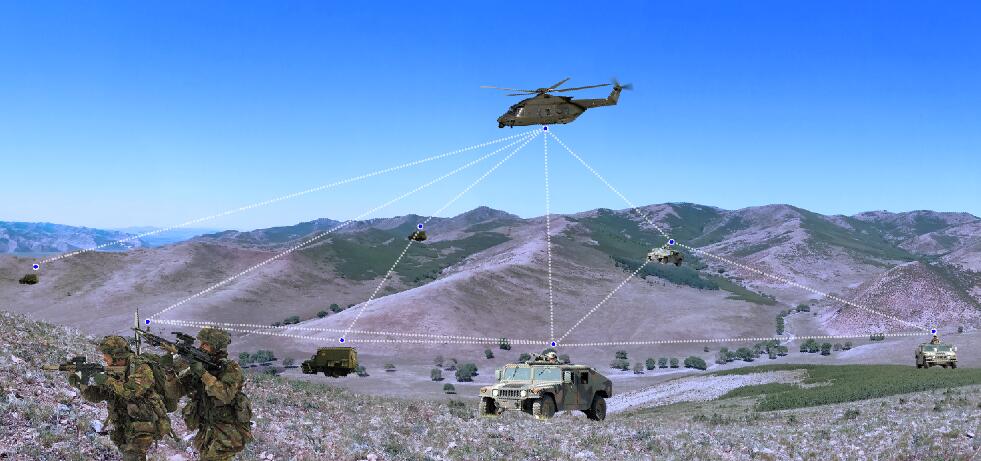
The Mesh wireless ad-hoc network system is a mobile broadband multimedia communication system designed with the brand-new “Wireless Mesh Network” concept. Utilizing a centerless ad-hoc network distributed architecture, the system can realize real-time interaction of multimedia information such as multi-channel voice, data, and images under Non-Line-of-Sight (NLOS) and fast-moving conditions. The system supports arbitrary network topologies, and node devices can move randomly and quickly, allowing for rapid changes and updates to the system topology without affecting system transmission. The overall system features convenient deployment, flexible usage, simple operation, and easy maintenance.
I. MESH Technology Introduction
Mesh ad-hoc network is a new type of wireless network technology that is completely different from traditional wireless networks. In a Mesh network, each node is not an independent wireless repeater but is interconnected, meaning each node is connected to several channels to form a unified network. The advantage of this architecture is that when a line is blocked or unresponsive, nodes can autonomously select other lines for data transmission. The failure of a single node will not affect network access, providing extremely high reliability.
Core Functional Applications
Video collection devices of each combat team member and drone access the wireless ad-hoc network node via Ethernet port or WIFI. The system achieves real-time two-way interconnection with the command vehicle and the audio-video dispatch platform of the stay-behind commander. The command vehicle and stay-behind commander can retrieve video images sent back by one or more combat team members at any time through the audio-video dispatch platform or handheld command terminal for real-time command decision-making.
VOIP communication devices of each combat team member access the wireless ad-hoc network node via Ethernet port or WIFI. The system achieves real-time two-way interconnection with the command vehicle audio-video dispatch platform and the stay-behind commander. It supports voice call modes such as individual call, group call, and broadcast call, realizing efficient real-time two-way voice communication.
After positioning via BeiDou/GPS, the location information of each wireless ad-hoc network node can be transmitted and shared over the network. The system adopts the NMEA0183 international standard protocol and is compatible with various positioning devices. Location information can be transmitted to the command terminal in real-time and displayed on the control interface, realizing real-time positioning and monitoring of each combat unit.
II. System Advantages
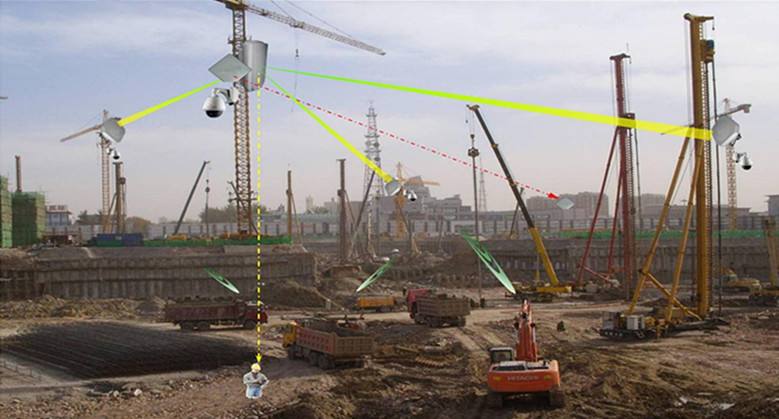
- Centerless Network: Can be deployed flexibly as needed, requiring no infrastructure such as equipment rooms or transmission networks. Supports arbitrary networking and multi-hop relay extension coverage.
- Private Network for Private Use: No link fees or traffic fees for wireless transmission links, reducing operating costs.
- Flexible Expansion: Supports hierarchical grouping and roaming networking, effectively expanding system communication capacity.
- Strong Anti-interference Ability: Features frequency hopping and digital filtering functions to effectively suppress remote interference; adopts ARQ transmission mechanism to reduce packet loss rate.
- Broadband Transparent Transmission: Supports non-discriminatory transparent transmission of multimedia services such as clear voice, broadband data, and high-definition video.
- Adaptive Image Transmission: Images have adaptive adjustment capabilities to ensure service continuity and smoothness.
- Anti-multipath Interference: Adopts COFDM technology, providing strong anti-multipath capabilities in complex environments.
- Dual Antenna Diversity: Supports TDD dual-transmission and dual-reception, achieving transmit/receive diversity to improve signal quality.
III. Application Fields
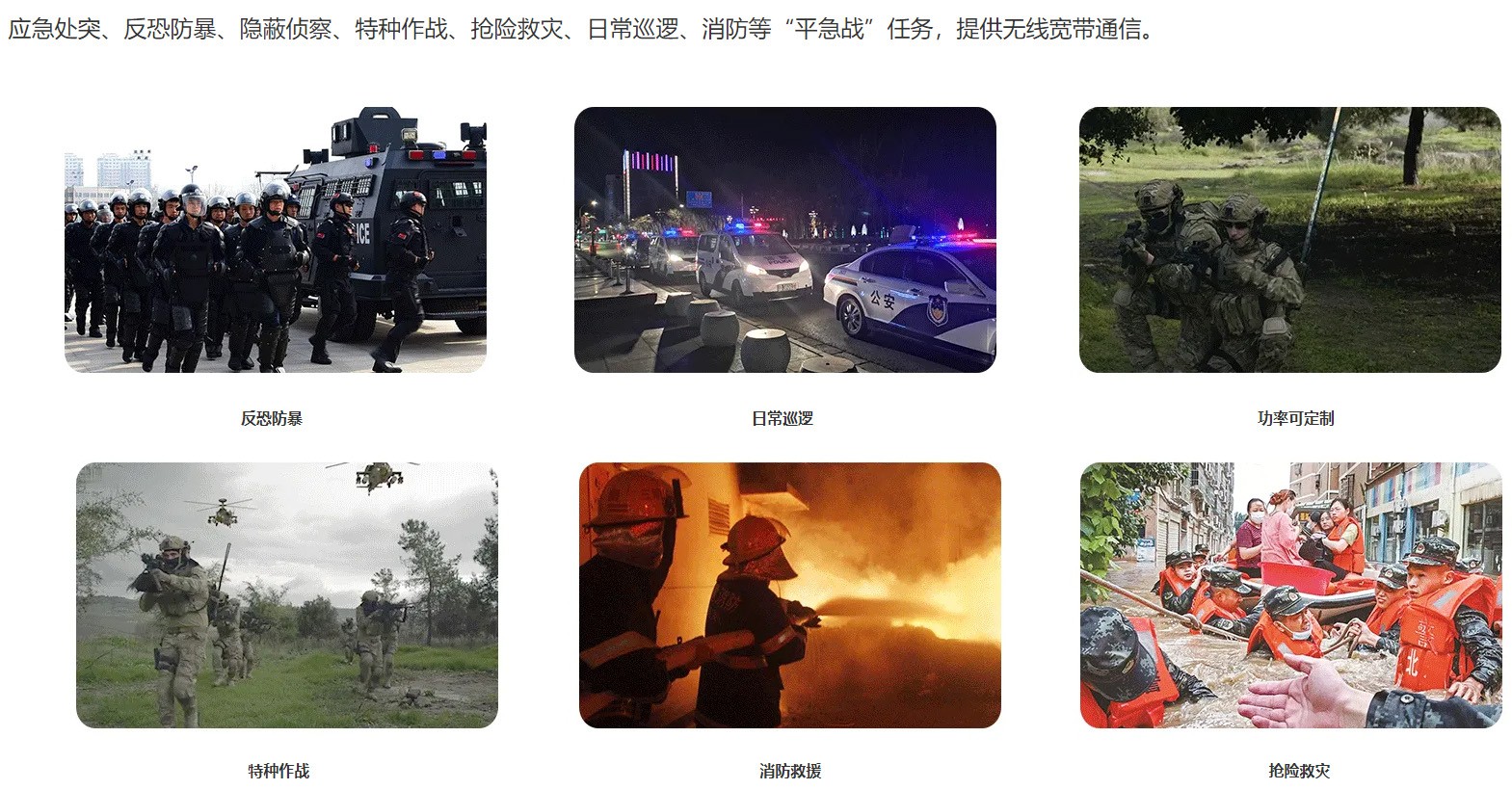
The Wireless Mesh Ad-hoc Network System, with its unique advantages, can meet various complex communication needs and is widely used in the following fields:
- Large-scale Event Security Patrol
- Urban Anti-terrorism and Stability Maintenance Command
- Emergency Rescue Command and Dispatch
- Fire Emergency Communication Command
- Naval Formation Shore-to-Sea Communication
- Industry Applications: Public Security, Firefighting, Electric Power, Petroleum, Water Conservancy, Forestry, Broadcasting and TV, Medical, Air-Water Communication, etc.
IV. System Features
1. Centerless, Co-frequency Self-organizing Network
The Mesh wireless ad-hoc network system is a centerless co-frequency system where all nodes are equal, and a single frequency point supports TDD two-way communication. Any node device can serve as an end node, relay node, or command node, independent of fixed facilities such as optical fibers or copper cables. Outdoor fixed stations, vehicle-mounted stations, and individual portable stations only need to be powered on to automatically form a network and communicate in real-time, making deployment extremely convenient.
2. High Reliability and Self-healing
The equipment is designed to military standards, waterproof and dustproof, rugged and durable, and adaptable to harsh environments. The Mesh network has self-forming and self-healing characteristics, and nodes usually have multiple available links. When a link fails, the system automatically selects other paths for transmission, effectively avoiding single points of failure and ensuring uninterrupted communication.
3. High Mobility and Rapid Deployment
Addressing the uncertainty of emergency scenes, the system supports the rapid establishment and withdrawal of temporary mobile base stations. High-performance portable base stations use single-frequency networking and simple configuration, meeting the needs of frontline combat personnel for “zero configuration, rapid network construction” in emergencies, ensuring commanders grasp the on-site dynamics in time.
4. Non-Line-of-Sight (NLOS) Transmission Capability
Utilizing automatic relay characteristics, signals can automatically select the best path for continuous hopping, achieving Beyond Visual Range (BVR) transmission. This enables the system to effectively overcome obstacle blocking and solve the “last mile” problem of communication coverage in various fields.
5. High Bandwidth and Mobile Adaptation
The system’s peak data bandwidth can reach 28Mbps, and it possesses non-fixed mobile transmission capabilities. Rapid movement will not affect the transmission of high-bandwidth services such as voice, data, and video, ensuring communication quality in scenarios with rapid topology changes and high-speed terminal movement.
6. Security and Confidentiality
The system provides multiple security mechanisms such as group encryption (including working frequency, carrier bandwidth, communication distance, networking mode, MESHID, etc.), channel encryption, and source encryption, effectively preventing illegal intrusion and information interception, ensuring high security of private network communication.