PTP RapidFire Success Story – Test Report Hungary
Leading WISP Performs 20 km Performance Test on LigoPTP 5-N in Hungary – ZNET
Link Information
| Device | LigoPTP RapidFire 5-N |
| Link Distance | 19.6 km (12.2 miles) |
| Coordinates | Unit 1: 46°38’17.49″N, 16°50’16.64″E Unit 2: 46°26’53.20″N, 16°47’24.15″E |
| Terrain | Flat |
| Other Environmental Factors | Foggy Area |
| Antenna | 34 dBi (120 cm) Grante HPA Dual-polarization Antenna |
Link Path Analysis
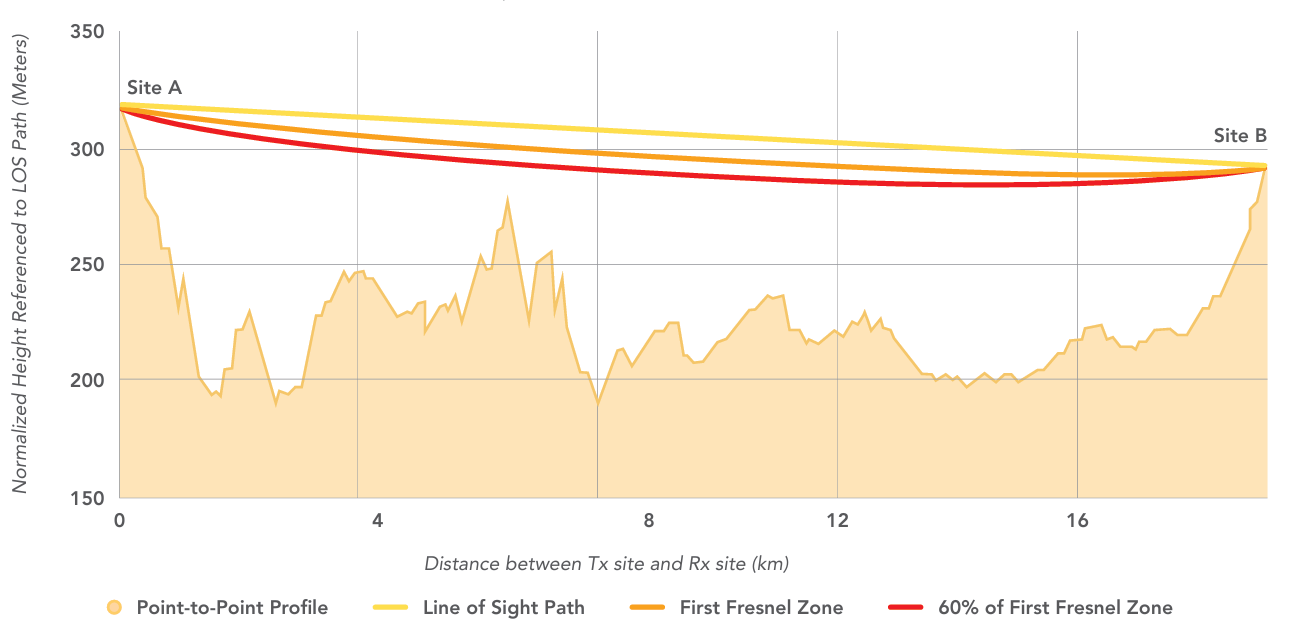
Path Profile between TX and RX Sites
Spectrum Analysis
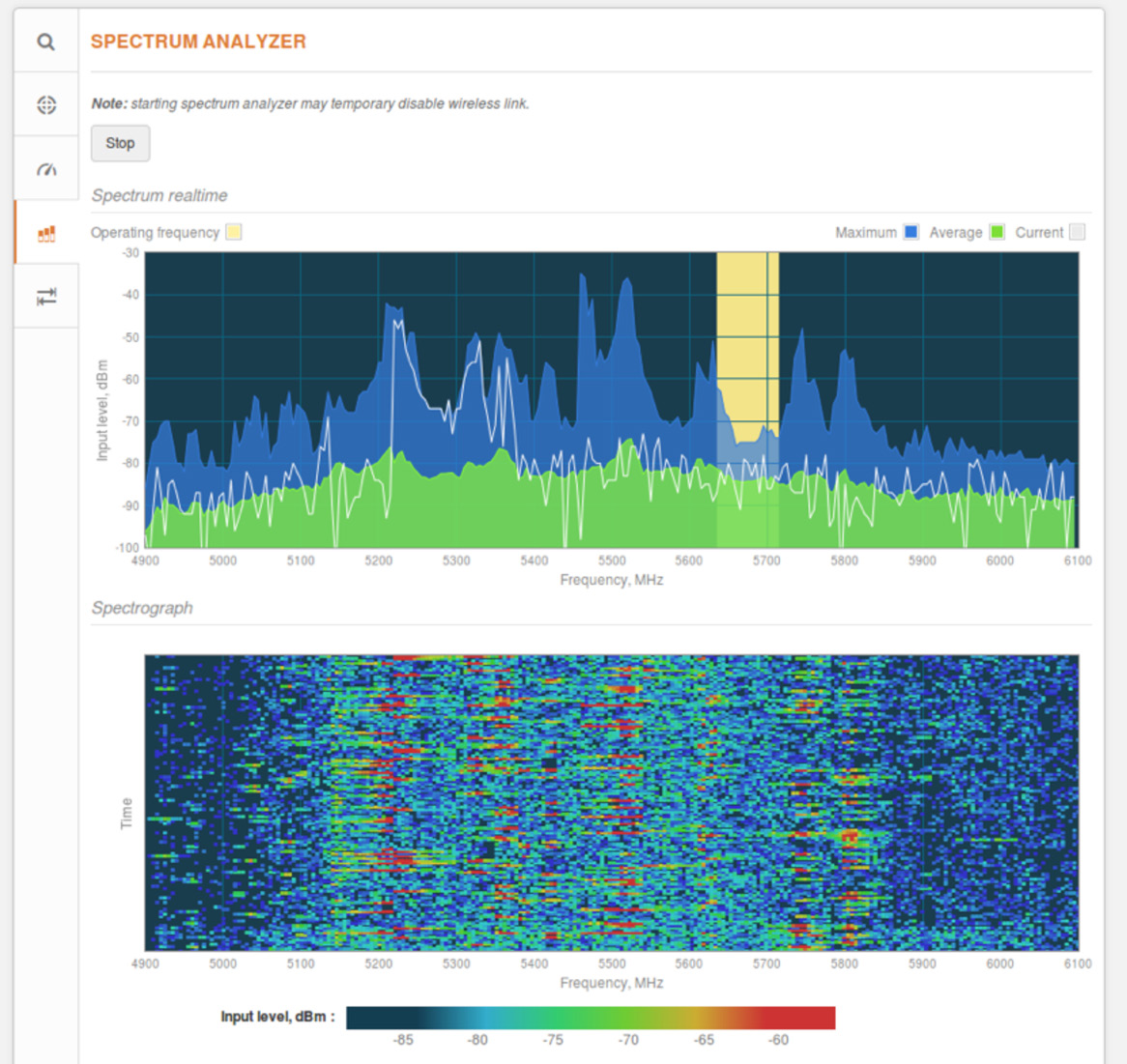
There is considerable noise in the 5 GHz frequency range in the area where the link is installed. This screenshot shows the noise floor 4-PTP overview of the site. The LigoPTP RapidFire features a brand-new integrated spectrum analyzer that not only displays waveforms for peak, average, and current noise, but also a waterfall chart for viewing noise variations over time.
Link Statistics
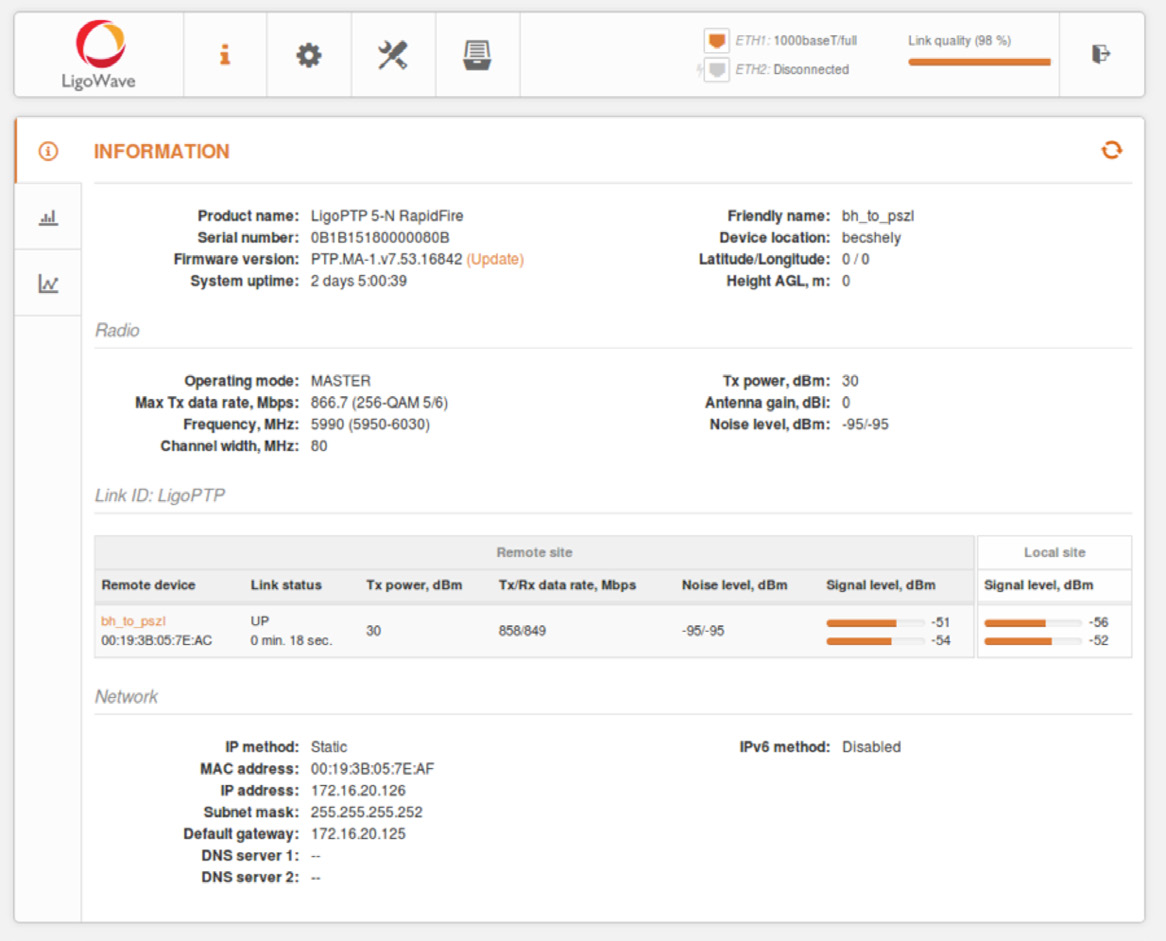
Signal levels on both sides range from -40 to -50, allowing the highest QAM 256 modulation even on 80 MHz channels. Additional statistics for this link can be found in the screenshot of the new user interface above.
Link Test
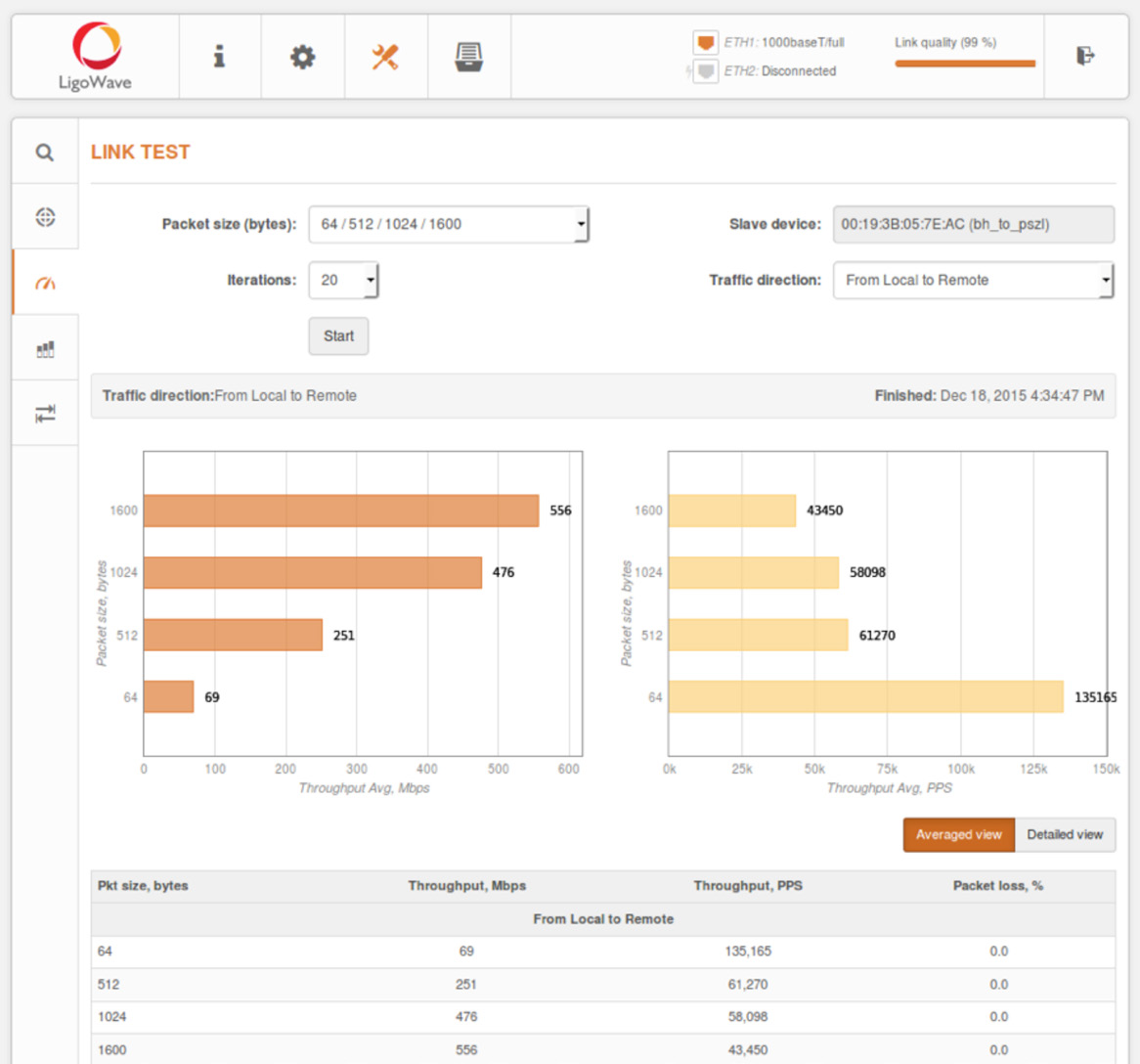
There are multiple methods to measure the throughput of LigoPTP RapidFire devices. One is using the Link Test in the UI Tools section. The screenshot shows test results for different packet sizes. In this case, maximum capacity is 556 Mbps, with a maximum PPS (Packets Per Second) rate of 135,000. Alternatively, an Iperf tool runs on the device, accessible via console.
The table below shows link performance in different directions when generating UDP traffic.