Railway platform wireless coverage and emergency communication system solution
Railway Platform Wireless Coverage and Emergency Communication System Solution
I. Customer Requirement Analysis
Application Scenario: Railway platform area (approx. 5km length).
Personnel Scale: Numerous platform staff (approx. 30 personnel).
Core Requirements:
- Data Transmission: Real-time transmission of operational status to the monitoring center during work.
- Functional Requirements: Support for two-way voice communication and GPS positioning.
- Network Coverage: Wireless signal coverage required for the area, supporting LAN transmission of various data signals.
II. Solution Design Analysis
Based on customer requirements and site conditions, we formulated a “4G Body-Worn + WiFi Base Station” hybrid networking solution to balance functional needs and operational costs.
1. Terminal Configuration
Equip each of the approx. 30 platform staff with a 4G Android Body-Worn Device. This device features real-time image transmission, two-way voice intercom, GPS positioning, etc., fully meeting on-site operational needs.
2. Cost Control & Network Optimization
Pain Point: Exclusively using carrier 4G data leads to excessive long-term operational costs.
Strategy: Deploy base stations in the platform area to provide wireless WiFi signal coverage.
Advantage: 4G body-worn devices support WiFi transmission. During platform operations, devices prioritize WiFi connection, avoiding huge data costs while ensuring more stable LAN bandwidth.
III. On-site Solution Design
This solution primarily provides comprehensive wireless signal coverage for the 5km platform area.
1. Coverage Deployment Strategy
- Area Partitioning: Divide the 5km platform area into 5 sectors.
- Site Selection: Provide WiFi coverage at 5 points.
- Equipment Selection: Adopt our company’s SF-5000MS Base Station Wireless Equipment.
- Antenna Configuration: External 120-degree sector antennas for bidirectional wireless coverage.
- Roaming Configuration: Configure identical SSID for all devices to ensure seamless roaming for handheld body-worn devices when switching between areas.
2. Base Station Backhaul Solution
Two solutions are provided for the connection (backhaul) of the 5 WiFi coverage points:
- Option 1 (Fiber Optic): Where conditions permit, use fiber optics to connect the 5 base station coverage points (Stable & Preferred).
- Option 2 (Wireless): If cabling is inconvenient on the platform, use wireless equipment for bridge transmission between the 5 base stations.
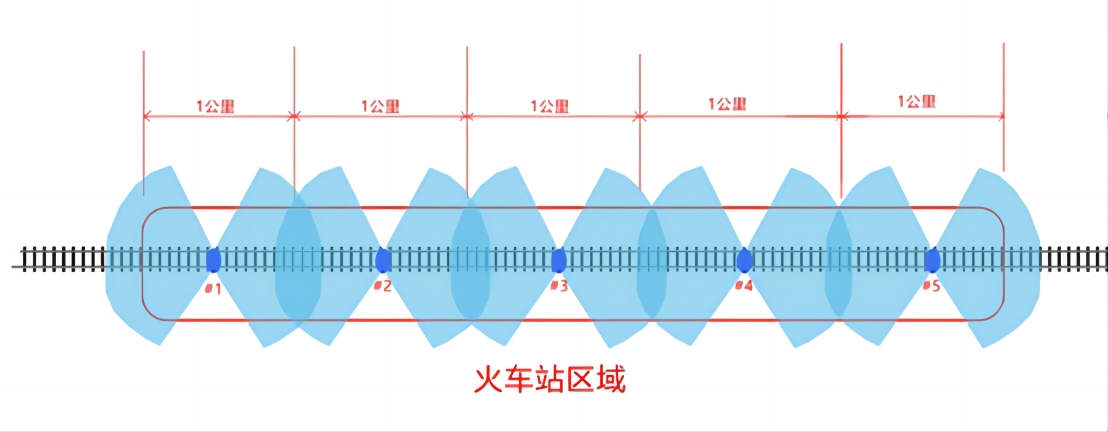
Figure: Platform Area Wireless Signal Coverage Deployment Plan
IV. Product Functionality Implementation & Advantages
When the Android body-worn client operates on-site, the device accesses the network via WiFi signals, connecting to different base station hotspots based on signal strength in different zones, and finally transmitting to the monitoring center.
1. Core Functions
- Video Surveillance: Real-time backhaul of on-site images using LAN/4G signals.
- Two-way Intercom: Realize real-time voice communication between the command center and on-site personnel.
- GPS Positioning: Real-time tracking of personnel location information.
- Flexible Switching: Use WiFi for in-station work; automatically switch to 4G data when at a distance to ensure uninterrupted monitoring.
2. Frequency Band Advantages
This solution adopts 5GHz Band WiFi for signal coverage. Compared to the commonly used 2.4GHz home band, the 5GHz band has stronger anti-interference capabilities, adapting to the special environment of the station.
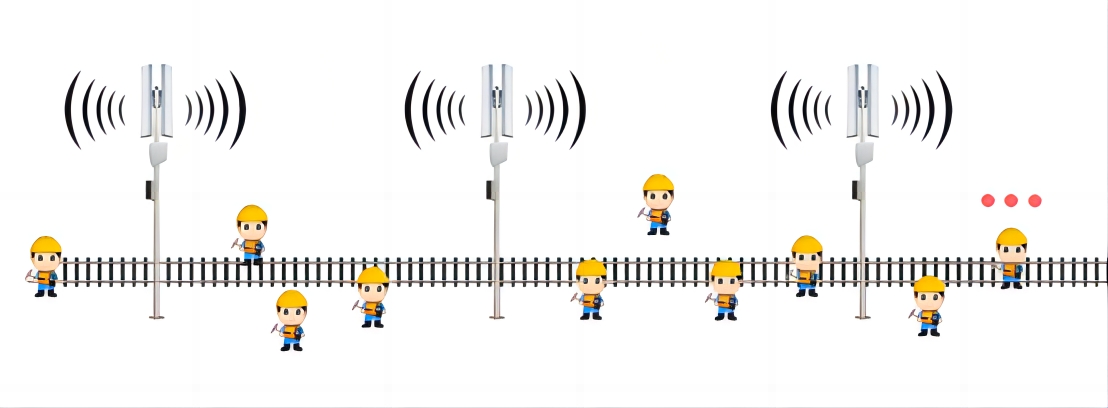
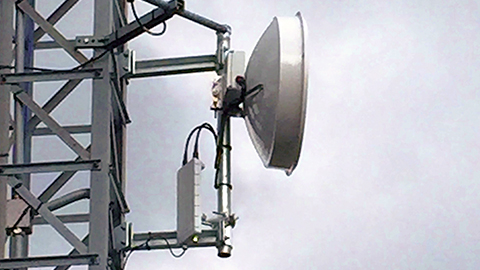
Figure: On-site Equipment Installation Photo
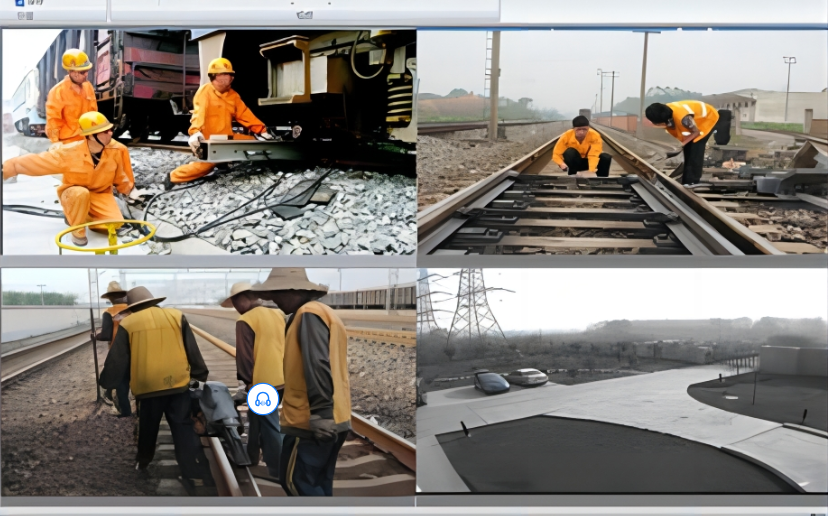
Figure: Monitoring Center Real-time Dispatch Screen