What is Mesh AD hoc Network? A Comprehensive Analysis of MANET AD Hoc Networks and Mesh Networks: Differences and Evolution
News 2026-02-14
Complete Guide to Mesh Networking, MANET & Mesh Networks: Definitions, Differences and Evolution
Since emerging in the late 20th century, ad hoc networking technology has become a critical pillar of modern communications. Within this field, Mesh Networking, MANET, and Mesh Networks are three core concepts—interconnected yet distinct. This article explores the definitions, development, and key differences between these three network architectures, and breaks down the classification and advantages of multi-hop ad hoc networks.

Figure 1: Multi-node interconnection architecture of Mesh Networking
1. Core Concepts Explained
1.1 Mesh Networking
Mesh Networking (also known as a Mesh Network) is a distributed network composed of multiple interconnected nodes. Each node acts as both an end device and a router, communicating directly with other nodes to form multi-hop transmission links. Its key features are decentralization, self-organization, and high robustness.
Originated from U.S. military distributed communication research in the 1980s–90s. As technology matured, it is now widely used in wireless sensor networks, smart city coverage, and emergency communication systems.
1.2 MANET (Mobile Ad Hoc Network)
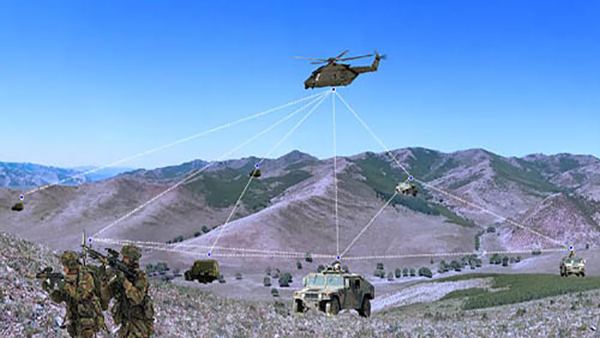
MANET is a mobile self-organizing network that operates without fixed infrastructure. It emphasizes mobility and is ideal for temporary, dynamically changing scenarios such as military tactical communications, emergency rescue, and vehicular networks.
- Decentralized: No fixed base stations; nodes communicate as peers.
- High Mobility: Nodes move freely, with real-time dynamic topology changes.
- Self-Organizing: Nodes automatically discover, join, or leave the network with zero configuration.
- Strong Robustness: No central controller; single-point failure does not disable the entire network.
1.3 Mesh Network (General Definition)
As a distributed topology, Mesh Networks include both wireless and wired (e.g., Ethernet) communications. Their core logic is full-network interconnection via “multi-hop” relay, offering strong self-healing and versatility for internet access and city-scale coverage.
2. Concept Comparison: Differences & Relationships
While all three share “multi-hop communication” as a foundation, they differ significantly in application focus:
Mesh is a broad concept including wired and wireless forms, often used for relatively stable urban or regional coverage. MANET focuses on wireless mobility, emphasizing high-speed node movement and rapid topology changes (e.g., battlefield, vehicle fleets).
“Mesh Network” is a general term for this topology. Both Mesh Networking and MANET can be seen as practical implementations of a Mesh Network—one focusing on architecture, the other on mobile application characteristics.
3. Application Categories of Multi-Hop Ad Hoc Networks

Used for environmental monitoring, collecting temperature, humidity, gas, and other data.
Provides wireless internet access for homes or enterprises (e.g., Wi-Fi Mesh).
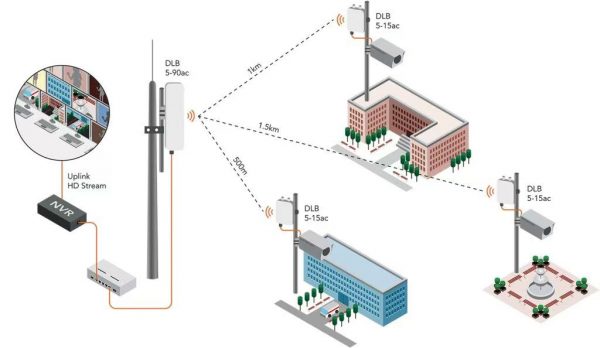
Builds smart city infrastructure, supporting citywide Wi-Fi and surveillance.
Supports communications for mobile units and safe V2V information exchange.
4. Evolution & Advantages of Mesh Networking
With improvements in communication protocols and hardware performance, Mesh Networking has evolved from basic connectivity to an intelligent, high-performance communication system:
- Wider Coverage: Easily spans cities, rural areas, and remote regions, solving the “last-mile” access challenge.
- Higher Transmission Speed: Supports large multimedia data streams for HD video surveillance and real-time conferencing.
- Stronger Security: Uses end-to-end encryption, authentication, and access control to protect data during multi-hop transmission.
- Smarter Management: Automated spectrum allocation and routing reduce network operation and resource management complexity.
Summary: Mesh Networking, MANET, and Mesh Networks form the foundation of modern ad hoc networking. Understanding their definitions and differences helps in selecting the right technology for smart cities, emergency response, industrial IoT, and more. As technology advances, Mesh Networking continues to deliver greater flexibility and performance, providing a solid network foundation for the future of the Internet of Everything.