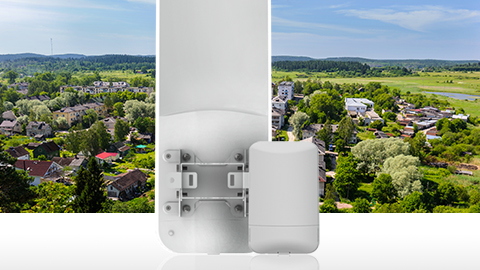
In extreme scenarios such as natural disasters and major accidents, public networks are prone to disruption, while mission-critical operations—emergency command, on-site rescue, and industrial inspection—demand continuous, highly reliable, high-throughput communications. The Guiding Opinions on Strengthening Emergency Communications Capability Building in Extreme Scenarios, jointly issued by the Ministry of Industry and Information Technology (MIIT) and 13 other departments, explicitly call for building dedicated communications networks that meet operational emergency requirements and interconnect with public networks, forming a coordinated public–private emergency communications capability system. As a core product in the infrastructureless (gateway-free) networking segment, the CHX-602 handheld MANET/MESH terminal leverages the advantages of a distributed, infrastructureless architecture to align with national emergency communications objectives. It has become a key communications assurance tool across public security, firefighting, power, and oil & gas sectors, providing a stable, secure, transparent IP pipe for multimedia data delivery in complex environments.
1. Core Product Capabilities: Technology-Driven, Built for Complex Scenarios
Designed to industrial-grade standards, the CHX-602 handheld MANET/MESH terminal integrates wideband communications, intelligent networking, HD interaction, and full-area positioning. From RF transmission and feature set to physical protection, it meets high-end industry benchmarks. Its key technical characteristics fully align with the development requirements of wireless MESH/MANET systems: rapid network formation, anti-destruction self-healing, and flexible scalability.
(1) Radio Link: Wideband, Interference-Resilient, High-Throughput Stability
The device supports a wideband 1420–1520MHz operating band and offers band customization to better penetrate forests, buildings, and terrain obstructions, addressing the weak-signal and limited-coverage constraints of conventional radios in complex environments. It adopts COFDM and 2T2R MIMO—core configurations for dismounted MANET terminals—significantly improving multipath resistance and link robustness. With a 20MHz channel, peak throughput reaches up to 90Mbps, meeting real-time requirements for HD video and large data payloads. Transmit power is 2×2W and receiver sensitivity is ≤-100dBm. Combined with AES-128/256 encryption, it delivers both range/stability and strong data security against leakage and malicious interference.
(2) Intelligent Networking: Infrastructureless Architecture, Adaptive Topologies
As an infrastructureless MANET device, the CHX-602 requires no central gateway. If any node in a group goes offline, nodes within coverage automatically re-establish links with remaining peers, enabling network self-healing—an essential capability for emergency communications under extreme conditions. It supports point-to-multipoint, linear relay (chain), mesh, and hybrid topologies. Same-frequency networking supports ≥32 nodes and can be rapidly adapted to operational needs. Whether for dispersed dismounted operations, vehicle-based command coordination, or airborne relay nodes, it builds a stable communications network suitable for multi-platform collaboration across UAVs, UGVs, and dismounted terminals.
(3) User Experience & Management: HD Visualization, Simple Operation
The device features an HD display for real-time visibility of device status, link status, and straight-line distance to peer nodes. Rapid configuration is completed via on-screen buttons, enabling frontline users to operate with minimal training. It supports intelligent frequency selection with adjustable bandwidth options (5/10/20MHz), allowing optimal channel selection based on the local RF environment to reduce conflicts. A touch-activated battery indicator provides instant remaining-capacity checks, improving endurance management for extended outdoor missions. For operations and administration, the platform offers both PC and mobile app tools, supporting dynamic topology viewing, real-time link monitoring, and remote configuration—allowing command centers to maintain centralized situational awareness and efficient control over the communications network.
(4) Wide-Area Positioning + Multi-Service Support: One Device, Multiple Missions
Integrated BeiDou + GPS dual-mode positioning enables accurate, real-time tracking of personnel and assets, addressing the common pain point of unknown positions and lost contact in complex scenarios. The device supports Wi-Fi AP mode, an Ethernet interface, and PTT voice services, enabling seamless integration with acquisition terminals, pan-tilt cameras, and command terminals. It provides converged IP-based transmission for video, voice, and data—delivering true multi-purpose capability to support end-to-end workflows including on-site communications, data acquisition, and command dissemination.
(5) Industrial-Grade Ruggedization: Built for Harsh Environments
With a compact design (net dimensions ≤225×90×50mm) and net weight ≤1.2kg, the device is handheld and portable, meeting lightweight requirements for dismounted operations. Operating temperature range spans -30℃ to +65℃, and protection rating reaches IP66, withstanding dust, rain, and impacts to ensure stable performance in high-cold, high-heat, humid, and dusty outdoor or incident-site environments. Single-device endurance is ≥6 hours, supporting extended missions without frequent recharging.
2. Application Scenarios: Public Safety, Industry, Emergency Response, Forestry, and More
Powered by its technical and functional advantages, the CHX-602 handheld MANET/MESH terminal is widely applicable across public security, firefighting, power utilities, oil & gas, water conservancy, forestry, broadcasting, medical services, maritime, and airborne communications. It serves as a standardized solution for addressing communications challenges in complex environments. These scenarios closely match the primary global application directions of wireless MESH/MANET systems in defense, public safety, and industrial inspection.
(1) Public Safety: Police / Firefighting—Seamless Field-to-Command Coordination
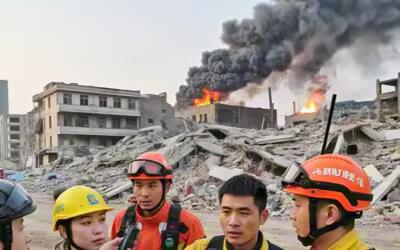
In urban counter-terrorism, incident response, and firefighting/rescue operations, public networks often fail due to dense crowds, building obstructions, or infrastructure damage. The CHX-602 rapidly forms a dedicated emergency communications network: frontline officers/firefighters carry the device into the scene and use PTT voice for real-time communications, while HD video from helmet cameras and field acquisition equipment is backhauled to the command center over the MANET. Command staff can view on-scene situational information and personnel locations via PC/app to enable precise dispatch. In coverage blind spots such as high-rise buildings and forests, the system can combine chain relays and mesh networking with vehicle-mounted and airborne nodes to achieve full-area coverage—ensuring “where there are responders, there is connectivity; where there is connectivity, communications are assured,” addressing the long-standing pain point of communications dead zones in firefighting and rescue.
(2) Industrial Inspection: Oil & Gas / Power / Water—Safer and More Efficient Field Operations
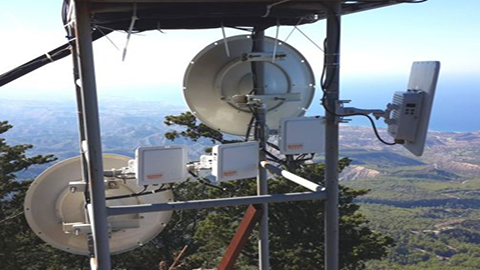
Oil pipelines, power lines, and water conservancy assets are often located in remote areas with insufficient public-network coverage and complex terrain. Traditional inspection methods commonly face poor communications, delayed hazard detection, and inadequate personnel safety assurance. Taking oil pipeline inspection as an example, a complete inspection system can be built with CHX-602 handheld MANET terminals, acquisition devices, base-station MANET nodes, and HD PTZ cameras: deploy base-station nodes at high points such as towers; inspectors carrying CHX-602 connect wirelessly between base stations and the control center for real-time positioning; acquisition devices detect micro-defects not visible to the naked eye, and data is transmitted over the MANET over long distances to the control center. Inspectors and command staff can view live field imagery simultaneously, improving hazard screening efficiency while enabling rapid response during incidents and enhancing inspector safety.
The same architecture applies to power-line inspection and water conservancy patrols. Leveraging the CHX-602 dual-mode positioning and HD video transmission capabilities, it enables end-to-end personnel oversight and real-time backhaul of field data—solving the “communications, positioning, and management” challenges of remote inspections.
(3) Forestry & Ecology: Wildfire Prevention / Forest Monitoring—Integrated Ground–Air Communications
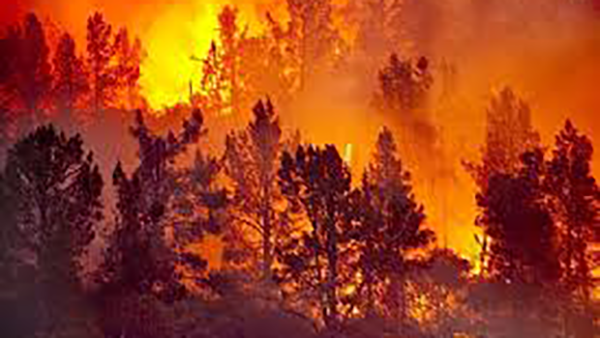
Forested areas feature complex terrain and vast coverage with sparse public-network availability, making reliable communications and positioning essential for wildfire prevention and forest patrol. The CHX-602 can work with UAVs and vehicle terminals to build an integrated ground–air mesh network: fixed base nodes are deployed at high points; patrol personnel carry the device into the forest; UAV-mounted MANET nodes provide airborne relays to expand coverage. The BeiDou + GPS positioning function backhauls patrol locations in real time, while HD video enables rapid reporting of fire incidents, vegetation damage, and other findings to the command center—supporting “early detection and early response” and addressing the challenges of short communications range and missing location information in wildfire operations. In addition, the IP66 protection and wide operating temperature range match the high-heat, humid, and dusty conditions typical of forest environments.
(4) Broadcasting & Medical Services: Live Production / Emergency Care—Reliable Data Backhaul
For outdoor live broadcasting, sports coverage, and on-site news gathering during incidents, broadcasters require stringent real-time HD video transmission. The CHX-602 peak throughput of up to 90Mbps supports wireless transport of 4K video. The infrastructureless MANET architecture avoids service interruption caused by single-node failures and supports multi-device collaborative networking, matching the distributed operating pattern of production teams.
In medical emergency response at earthquake, flood, and other disaster sites, rescue teams can use the CHX-602 to establish links with rear hospitals, backhauling real-time patient vital-sign data and injury video. Remote specialists can provide guidance for treatment, while the device’s positioning enables accurate management of medical points and personnel, improving emergency medical response efficiency.
(5) Maritime / Airborne Communications: Vessel–UAV Collaboration for Cross-Domain Connectivity
For maritime operations, vessel formations can use the CHX-602 to build a mesh network enabling voice and data communications between vessels and between vessels and shore-based command centers, addressing inadequate public-network coverage at sea. For UAV swarm operations, UAV-mounted MANET nodes can collaborate with ground handheld/vehicle-mounted CHX-602 devices to interconnect airborne and ground nodes, enabling real-time backhaul of aerial imaging data and remote UAV control—supporting applications such as agricultural operations, surveying and mapping, and emergency reconnaissance.
3. Standardized Deployment Options: Three Networking Modes for Different Missions
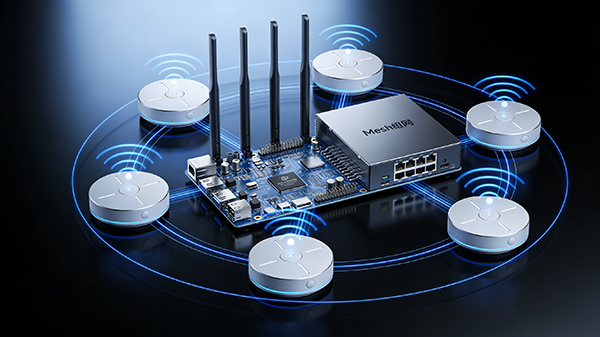
The CHX-602 handheld MANET/MESH terminal supports three primary networking modes—mesh, chain, and hybrid—selected flexibly based on the environment, scale of operations, and multi-device collaboration needs. None of the modes requires pre-built communications infrastructure. Power-on triggers automatic networking for “minutes-level” network formation, meeting the operational requirements of emergency communications: rapid deployment, immediate availability, and instant connectivity.
(1) Mesh Topology: For Distributed Operations with Full-Area Coverage
Network composition: dismounted nodes + vehicle command nodes + airborne nodes + PC terminal; can interwork with carrier networks and satellite networks for cross-network interoperability. Key advantages: full interconnectivity among nodes; any single-node failure does not impact the overall network, delivering strong survivability; wide coverage enabling full-area communications without blind spots. Applicable scenarios: forest patrol, large campus/industrial park security, large-area disaster rescue (earthquake/flood), vessel formation operations, and other distributed mission profiles.
(2) Chain Topology: For Long-Distance Operations via Multi-Hop Relay
Network composition: dismounted nodes + airborne relay nodes + vehicle command nodes + PC terminal; can interface with satellite networks for long-haul transport. Key advantages: sequential multi-hop relays enable long-distance signal delivery, addressing communications challenges in remote areas and over extended distances; simple structure and convenient deployment. Applicable scenarios: oil pipeline inspection, power-line patrol, highway emergency response, and long-range linear missions such as forest search and rescue.
(3) Hybrid Topology: For Complex Joint Operations with Multi-Platform Coordination
Network composition: dismounted nodes + vehicle command nodes + airborne nodes + fixed base-station nodes + PC terminal; integrates carrier networks, IP networks, and satellite networks. Key advantages: combines the strengths of mesh and chain networking to enable coordinated operation across multiple node types and multiple networks, matching multi-device and multi-team requirements in complex scenarios; the command center can achieve comprehensive field control through multi-network access. Applicable scenarios: large-scale firefighting and rescue, urban counter-terrorism and stability operations, major event security, and complex joint operations on large construction sites.
4. Product Value: Policy Alignment and Modernization of Emergency Communications
National initiatives are accelerating the build-out of an integrated “space–air–ground–sea” emergency communications framework, requiring improved communications assurance under extreme conditions—including scenarios with road outages and power failures—to maintain connectivity. As a core terminal for dedicated communications networks, the CHX-602—through its infrastructureless MANET architecture, rapid network formation, and full-scenario adaptability—aligns closely with these policy requirements and becomes an important building block for coordinated public–private emergency communications networks.
From an industry perspective, the global wireless MESH/MANET market is growing rapidly at a 16.1% CAGR, with defense, public safety, and industrial inspection as the primary application segments. With industrial-grade design, highly reliable transport, flexible networking, and broad scenario coverage, the CHX-602 meets real operational requirements while providing a standardized, replicable emergency communications solution—accelerating the adoption of MANET technology in civilian and industrial sectors.
In terms of practical value, the CHX-602 not only addresses the longstanding challenges of “communications, positioning, and management” in complex environments, but also improves operational efficiency and safety assurance through converged multimedia transport, efficient remote control and management, and precise personnel positioning—delivering strong communications technology support for high-quality development across public security, firefighting, oil & gas, and power sectors.
5. Summary
Centered on a distributed, infrastructureless MANET architecture, the CHX-602 handheld MANET/MESH terminal integrates wideband communications, intelligent channel selection, dual-mode positioning, and HD visualization to deliver an industrial-grade emergency communications device suitable for full-spectrum scenarios and industries. Its rapid network formation, survivability/self-healing, high-throughput stability, and rugged durability directly address emergency communications needs in extreme environments. Combined with diverse application scenarios and flexible networking modes, it becomes a core communications solution for public safety, industrial inspection, emergency rescue, and forestry/ecology operations.
As national efforts continue to modernize emergency communications capabilities, the CHX-602 will keep leveraging its technical strengths to support the integrated national emergency communications framework and enhance communications assurance across industries—serving as a “hardcore” tool for keeping critical links online in extreme scenarios.